

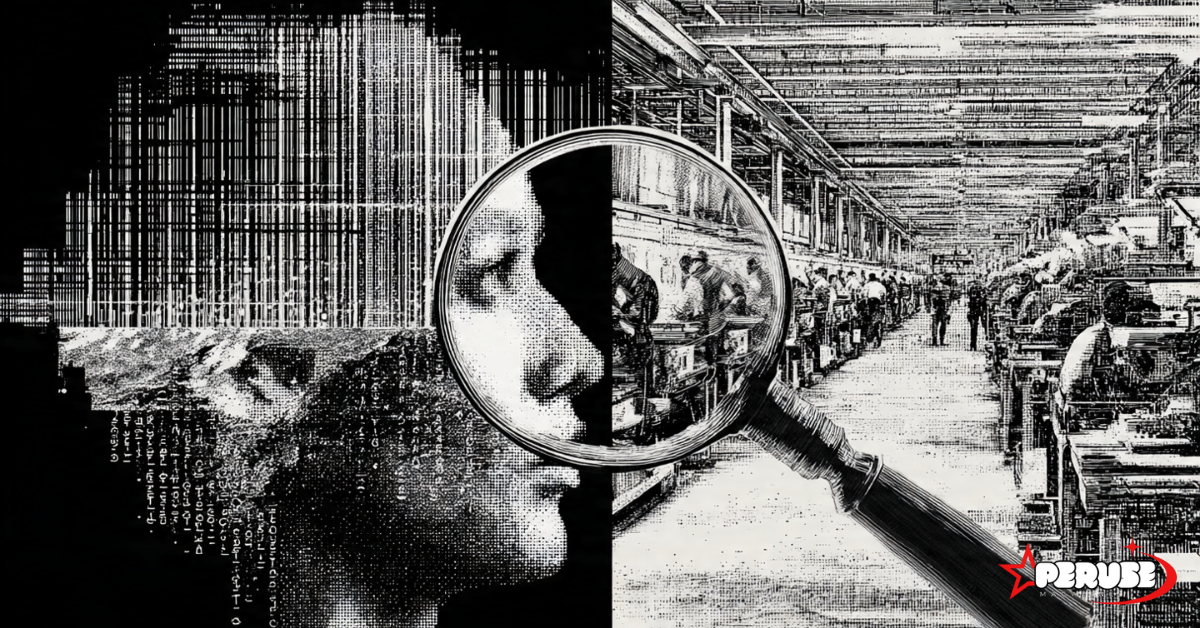
In the bustling online market of 2025, where AI tools and tech visionaries are traded like digital currency, one name keeps surfacing with puzzling persistence: Chuck Kim of Vesta Technology. A quick search promises insights into a “visionary AI leader,” a “blockchain identity pioneer,” or the force behind “next-gen IoT solutions.” Dozens of articles, published on various tech sites, paint a picture of a modern innovator. But when you dig for a primary source a LinkedIn profile, a conference talk, a patent, a company website, you find nothing but a ghost in the machine. Our investigation reveals a fascinating truth: “Chuck Kim Vesta Technology” is not a story about the future of tech, but a cautionary tale about its past being rewritten by the very algorithms shaping our present.
This isn’t a typical tech profile. It’s a digital archaeology project. We’re pulling back the layers of search engine results to expose how a legitimate piece of semiconductor history from the early 2000s has been cloned, distorted, and repackaged for modern clicks. Understanding this phenomenon reveals more about today’s AI-driven content ecosystem than any fictional innovator ever could.
🖥️ Quick Tech Summary: The “SEO Ghost” Phenomenon
| Aspect | Details |
|---|---|
| Main Topic | The “Chuck Kim Vesta Technology” digital myth and the proliferation of AI-generated, low-quality SEO content. |
| Tech Type | Information Ecosystem / Digital Misinformation Case Study. |
| Launched / Popular Since | Historical figure (c. 2005); False AI persona emerged circa 2023-2024. |
| Ideal For | Tech enthusiasts, digital literacy advocates, content creators, and anyone who researches online. |
| Key Insight / Impact | Demonstrates how AI content farms can fabricate credible-looking tech narratives, polluting search results and obscuring real history. |
The Authentic History: Chuck Kim and the Real Vesta Tech
To understand the fiction, we must first excavate the truth. The kernel of reality at the center of this digital ghost comes not from the AI labs of the 2020s, but from the cleanrooms of the mid-2000s.
The Semiconductor Era: ALD and the 45nm Challenge
In 2005, the semiconductor industry was hitting a wall. The relentless march of Moore’s Law was demanding circuits smaller than ever, pushing past the 65-nanometer (nm) node toward 45nm. At this scale, traditional manufacturing techniques struggled. The need was for Atomic Layer Deposition (ALD), a meticulous process that deposits films one atomic layer at a time, essential for creating the vanishingly thin, perfect insulating layers inside advanced chips.
Enter the real Vesta Technology. Based in Massachusetts, it was a niche player in the precision wafer-processing equipment market. In August 2005, EE Times, the industry’s paper of record, published an article titled “Vesta unveils wafer-preparation tool for 45-nm processing.” The article quoted the company’s Executive Director of Marketing, a man named Chuck Kim.
The real Chuck Kim wasn’t an AI prophet; he was a marketing executive explaining a highly specific, physical tool—the VULCAN™ system, designed to prepare silicon wafers before ALD. His comments were technical, grounded, and confined to the world of furnaces, surface preparation, and yield rates. This was a snapshot of an engineer solving the tangible problems of his day.
Vesta Technology Inc.’s Actual Legacy
Vesta Technology Inc.’s real-world footprint aligns with this history. Its products, like the IRIS™ metrology system and the VULCAN™ wafer processing system, were designed for semiconductor fabrication lines. The company was acquired in 2007 by SierraTherm, a manufacturer of thermal processing systems, and faded from the industry spotlight. This is a complete, mundane, and authentic corporate history. It has a beginning, a middle, and an end. Until the AI content machines found it.
The Digital Mirage: How History Was Rewritten
Sometime around 2023-2024, something strange happened. The name “Chuck Kim Vesta Technology” began appearing in articles that had nothing to do with semiconductor furnaces.
Deconstructing the Modern “Chuck Kim” Persona
The new, AI-generated persona is almost comically generic, a parody of a “tech thought leader.” A scan of these low-authority websites reveals a pattern of grandiose, context-free claims:
- The “AI & Machine Learning Visionary”: One site claims he is “pioneering ethical AI frameworks that will define human-machine collaboration for decades.”
- The “Blockchain and Digital Identity Pioneer”: Another asserts he founded Vesta Technology to “decentralize digital identity using blockchain,” solving security and privacy issues.
- The “IoT and Smart Systems Architect”: A third posits his work is “integrating AI with IoT to create cognitive environments that anticipate human needs.”
The hallmark of these articles is their profound vagueness. They are stuffed with trending keywords—”blockchain,” “metaverse,” “IoT,” “AI ethics”—but offer zero concrete examples, product names, dates, or verifiable achievements. They read like a Markov chain trained on TechCrunch headlines from 2021.
The Anatomy of an SEO Ghost
So, how does a 2005 semiconductor marketing exec become a 2024 AI guru? The process is a perfect storm of outdated web data and modern content automation:
- The Seed Data: An authoritative, old source (the 2005 EE Times article) exists in some dusty corner of the internet or a data scrapable archive.
- The AI Scrape: An AI content farm, programmed to generate articles on “tech innovators,” scrapes this data. It identifies “Chuck Kim” and “Vesta Technology” as entities associated with “technology.”
- The Hallucinatory Rewrite: The large language model (LLM), lacking real-world knowledge, is prompted to write a fresh article. It disconnects the names from their historical context and recombines them with the high-traffic keywords it’s been trained on. History is erased; a new, marketable fiction is born.
- The Echo Chamber: Once a few of these articles exist, other AI models may scrape them as source material, creating a closed loop of misinformation that reinforces its own false reality. This is the SEO echo chamber—a network of sites referencing each other, creating the illusion of credibility.
Case Study: Spotting and Debunking Low-Quality Tech Content
This phenomenon isn’t just about one name. It’s a template for a new kind of digital pollution. Here’s how you can armor yourself against it.
Red Flags in the Search Results
Be skeptical of any tech article that exhibits these traits:
- The Generic Visionary: Profiles that ascribe wildly generic, world-changing “visions” without specific projects.
- The Missing Digital Footprint: No LinkedIn, no mentions on credible industry news sites (like The Verge or MIT Technology Review), no speaker profile at known conferences.
- The Keyword Stuffing: An overabundance of trending tech terms in awkward, unnatural phrasing.
- The Duplicate Content: Discovering nearly identical phrasing about the person or company on multiple, obscure websites.
How to Verify Tech Claims: A Quick Guide
- Check the Dates: Always look for the original date of publication. If all citations seem recent but refer to an “influential figure,” trace them back. The oldest source is often the true one.
- Seek Primary Sources: Look for patents, academic papers, press releases from reputable news wires, or profiles on the company’s own (archived) website.
- Use Lateral Reading: Don’t just read one article. Open multiple tabs. Search the name alongside “controversy,” “company history,” or “semiconductor.” If the only results are from sites you’ve never heard of, that’s a major warning sign.
- Assess the Site’s Authority: Who runs the website? Do they have a clear editorial team? Do they link to credible external sources, or only to their own, equally vague content?
Why This Matters for Tech Enthusiasts
The “Chuck Kim” saga is a microcosm of a much larger problem. As Wired has noted in pieces on AI and information integrity, the web is becoming increasingly “filled with content designed for algorithms, not humans.” This has real consequences:
- It Degrades Trust: It makes genuine research more difficult, forcing users to wade through digital sludge to find facts.
- It Obscures Real History: The real, nuanced story of semiconductor innovation is overwritten by flashy, false narratives.
- It Warps Understanding: New learners entering a field may absorb these false narratives as fact, building their knowledge on a corrupted foundation.
This isn’t just an SEO issue; it’s an information literacy crisis. In the age of AI, our most critical skill is no longer finding information, but ruthlessly verifying it.
The Verdict: Chuck Kim Vesta Technology, Solved
So, let’s lay this digital ghost to rest.
- What’s REAL: Chuck Kim was the Executive Director of Marketing for Vesta Technology Inc., a semiconductor equipment company, circa 2005. He commented on wafer preparation tools for the 45nm manufacturing node. The company was later acquired and ceased independent operations.
- What’s FICTION: Chuck Kim is a contemporary AI, blockchain, or IoT visionary leading a modern company called Vesta Technology. All articles claiming this are fabrications, likely generated by AI content farms targeting search traffic for modern tech trends.
The story of Chuck Kim and Vesta Technology is a powerful reminder. In our rush to understand the future, we must not let algorithms erase or rewrite the past. The next time you stumble upon an exciting, unknown tech pioneer online, take a moment to dig. You might be unearthing not a breakthrough, but a blueprint of how our digital world gets muddled.
The real innovation we need now isn’t another AI tool it’s a better, more human filter for the sea of information they create. As we stand at this crossroads, do you think the responsibility for cleaning up the digital information ecosystem lies more with the platforms that host content, the creators who produce it, or the users who must learn to navigate it?