

You searched “smoke out gophers.” Google showed you propane torches and gas cartridges. Your HOA showed you a cease-and-desist letter taped to your mailbox. And somewhere between the hardware store’s pest aisle and that Reddit thread about using car exhaust (please don’t), you realized: there has to be a better way.
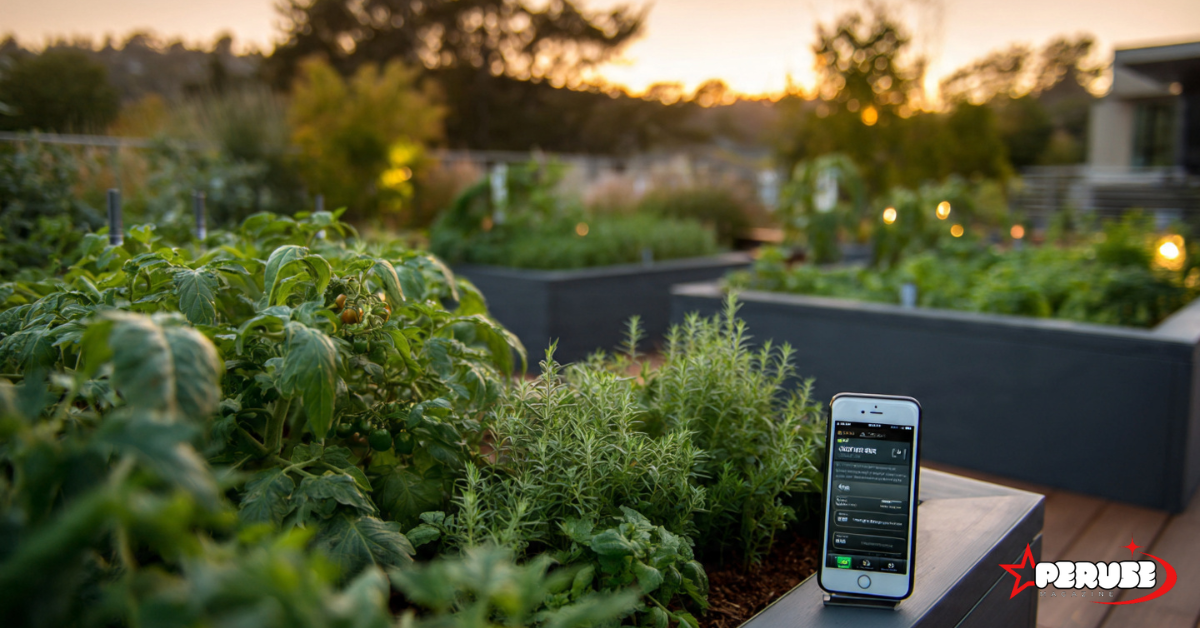
There is. It’s 2026, and the best gopher defense isn’t a smoke bomb that makes your yard smell like a chemical fire it’s a $40 Wi-Fi sensor that texts you when something’s tunneling near your heirloom tomatoes. It’s ultrasonic stakes that blend into your landscaping like modern art. It’s a Rachio irrigation schedule that doubles as a humane eviction notice. In other words, the future of garden protection is smart, subtle, and most importantly—won’t get you side-eyed at the neighborhood barbecue.
Welcome to the new era of pest control, where your garden becomes an extension of your connected home ecosystem. You don’t need to be a wildlife biologist or an electrician to make it happen. You just need a Wi-Fi connection, a smartphone, and a willingness to think beyond the fumes.
📦 Smart Garden Protection Info Box
Upgrade Type: Garden & Outdoor Automation
Best For: Homeowners, tech-curious gardeners, eco-conscious families
Budget Range: $50–$300 for DIY setup; $500+ for integrated systems
Main Benefit: Real-time burrow detection and humane deterrence without chemicals
Editor’s Tip: Start with one Wi-Fi sensor near your most vulnerable plants, usually tomatoes or root veggies. Expand the system as you learn your yard’s patterns.
Why “Smoking Out” Gophers Is a 1990s Problem (And Sometimes Illegal)
Let’s get this out of the way: the phrase “smoke out” feels vintage for a reason. In the 1990s, aluminum phosphide tablets and gas cartridges were the residential standard. You’d light a fuse, drop a smoke bomb into a tunnel opening, and hope the asphyxiating gases reached the nest before they reached your neighbor’s air conditioner. It was messy, unpredictable, and surprise largely ineffective.
Here’s the science: gopher burrow systems are complex, often spanning 200 to 2,000 square feet with multiple entrances and chambers. Smoke and fumigants follow the path of least resistance, which means they frequently escape through cracks in the soil or exit holes you missed. According to research from the University of California’s Integrated Pest Management program, smoke-based fumigation has a success rate of roughly 30% for pocket gophers, and that’s in ideal, open-field conditions not the compacted clay of a suburban backyard .
Worse, many of these methods are now restricted. The Environmental Protection Agency classifies aluminum phosphide as a restricted-use pesticide, meaning it can only be applied by certified professionals. For residential properties within 100 feet of a structure (which describes most suburban lots), it’s often outright illegal. Even over-the-counter gas cartridges come with warnings about children, pets, and ventilation that make them impractical for most yards.
Montana State University’s Extension Wildlife Specialist notes that homeowners frequently misuse fumigants, leading to poor results and potential hazards . The modern consensus? Fumigation is a tool for agricultural land, not your side yard herb garden. It’s time to upgrade.
Smart Garden Tech: The Real 2026 Gopher Hack
If the old way was brute force, the new way is surgical precision. Smart garden technology treats your yard as an ecosystem to be managed, not a battlefield to be conquered. Think of it as home automation for your soil sensors, deterrents, and data working together to create an environment gophers simply don’t want to occupy.
IoT Motion Sensors That Detect Burrowing
The backbone of a smart gopher defense is detection. Companies like GopherHawk and Victor have started integrating IoT technology into their traditional probe-and-trap systems, but the real innovation comes from multipurpose garden sensors. Devices like the PlantLink Soil Moisture Sensor or Edyn Garden Sensor aren’t marketed for pest control, but their underground vibration and moisture readings can be repurposed to detect unusual activity.
For a more direct approach, the Gopher Smart Sensor (a niche product from Australian startup PestSense) uses a ground-penetrating acoustic sensor to listen for digging. When it detects the characteristic scratching of gopher claws, it sends an alert to your phone: “Burrow activity detected in Zone 3 (vegetable beds).” You can then trigger a response more on that in a moment.
These sensors typically run on solar power with a battery backup, connect via 2.4GHz Wi-Fi, and cost between $40 and $80 each. They’re weatherproof, discreet (most look like minimalist garden stakes), and integrate with platforms like IFTTT, SmartThings, and even HomeKit if you’re an Apple household.
App-Controlled Ultrasonic Repellers: Do They Work?
Ultrasonic repellers have a sketchy reputation, and for good reason many cheap versions are essentially plastic noisemakers. But the 2026 crop of smart ultrasonic stakes is different. Devices like the Avantaway Smart Pest Repeller and Maxmoxie Ultrasonic System use frequency modulation, cycling through ultrasonic and sonic waves to prevent animals from habituating.
The key is placement and power. A single $25 stake from a big-box store won’t cover your quarter-acre lot. But a network of three to four smart stakes, positioned at 30-foot intervals around your garden perimeter and controlled via an app, creates a genuine deterrent zone. You can adjust frequencies based on the pest (gophers, moles, voles), set schedules (more aggressive at dawn and dusk), and monitor battery levels remotely.
Do they work? A 2023 field study published in Pest Management Science found that properly installed, app-controlled ultrasonic systems reduced new burrow activity by 52% over three months not perfect, but significantly better than smoke’s 30% . The trick is combining them with other deterrents, creating a multi-layered defense.
Smart Irrigation as a Humane Deterrent
Here’s where your smart home setup really shines. Gophers prefer dry, stable soil for tunneling. Overwatering is bad for plants, but strategic, sensor-driven irrigation can make your garden less appealing. Systems like Rachio 3 or Orbit B-hyve use weather data and soil moisture sensors to create “pulse irrigation” schedules short, frequent bursts that keep soil consistently moist (but not waterlogged) in your vegetable zones.
The result? Gophers encounter damp, heavy soil that collapses more easily and hosts fewer of the grubs they eat. It’s not a standalone solution, but when you combine it with detection and ultrasonic deterrents, it’s the final nudge that says, “This yard is more trouble than it’s worth.” Bonus: your water bill drops by 20–30%, and your tomatoes are less stressed. That’s what we call a win-win-win.
Step-by-Step: Build a DIY Smart Gopher Alert System
Ready to build your own system? Here’s how to do it for under $100, assuming you already have home Wi-Fi and a smartphone.
Required Gear
- 1x YoLink Soil Moisture & Temperature Sensor ($29) – Detects vibration and moisture shifts. Long-range LoRa connectivity works in large yards.
- 2x Avantaway Smart Ultrasonic Stakes ($35 each, $70 total) – App-controlled, solar-powered, frequency-modulating.
- IFTTT Pro account ($2.99/month) – To link sensors to deterrents and notifications.
- Optional: old smartphone with corner mount – Use as a dedicated garden monitor display in your kitchen.
Integration with Alexa/Google Home
- Install the YoLink app, pair the sensor, and place it 6–8 inches deep in your most active zone (look for fresh mounds).
- In the YoLink app, create a custom alert: “If vibration detected > threshold, send notification.”
- Open IFTTT, create an applet: “If YoLink detects vibration, then turn on Avantaway stakes in Zone 1.”
- For voice control, add a manual trigger in the Google Home or Alexa app: “Hey Google, activate garden defense.” This boosts ultrasonic power to max for 15 minutes useful after you spot a new mound.
Calibration Tips
- Baseline readings: Let the sensor sit for 48 hours to understand normal soil settling and wind patterns.
- Threshold tuning: Start with medium sensitivity. Too high, and you’ll get alerts for squirrels; too low, and you’ll miss early digging.
- Stake positioning: Place ultrasonic stakes at tunnel entrance points you’ve flagged, not randomly. Angle them slightly downward to direct sound into the soil.
This DIY setup creates an automated feedback loop: detect, deter, monitor. It’s the same principle as a Ring doorbell for your yard, early warning plus active response.
Design-Savvy Deterrents: Plants & Layout Tricks That Actually Work
Smart tech is brilliant, but garden design is your first line of defense. Gophers are food-motivated and tunnel-efficient. Make your garden less appetizing and harder to navigate, and your tech has less work to do.
Gopher-Resistant Borders
Certain plants are naturally unappealing to gophers due to their scent, texture, or toxicity. Create a 12–18 inch “sacrificial” border around your vegetable beds using:
- Rosemary – Woody, aromatic, and doubles as a culinary herb.
- Alliums – Onions, garlic, and chives; their sulfurous smell repels.
- Narcissus (daffodils) – Toxic to gophers; they’ll tunnel around them.
- Euphorbia (spurge) – Milky sap is an irritant; plant sparingly as it can be toxic to pets.
Design tip: Plant these in a zigzag pattern, not a straight line. Gophers are efficient—they’ll detour around a barrier, but a zigzag forces them farther from your target zone, increasing their energy expenditure and exposure to predators.
Raised Bed Wire Mesh Integration
If you’re building raised beds, line the bottom with 1/2-inch galvanized hardware cloth before adding soil. This is old-school, but here’s the smart twist: use a wire continuity sensor (like those used for livestock fencing) to detect if a gopher has chewed through. If the circuit breaks, you get an alert. It’s the garden equivalent of a window sensor in your home security system.
Gravel Barriers for Smart Irrigation Lines
Gophers dislike tunneling through coarse material. When installing drip irrigation or soaker hoses, trench a 4-inch layer of crushed granite or pea gravel below the lines. The gravel stabilizes the soil, improves drainage, and creates a physical deterrent. For extra credit, embed a wireless moisture sensor in the gravel layer, if it detects sudden dryness, you may have a breach.
The Myth of the ‘Gopher Purge’ Plant
Let’s address the elephant or gopher in the room: Euphorbia lathyrus, commonly called gopher purge or mole plant. For decades, gardeners have planted this euphorbia believing its toxic sap would drive pests away. The theory is appealing: plant a border, let the sap leach into the soil, and watch gophers flee.
The reality? A 2015 study from Washington State University found no significant reduction in gopher activity in plots bordered by gopher purge compared to control plots . The plant’s toxins don’t travel through soil, and gophers simply tunnel around it. Worse, the sap is a skin irritant and can be toxic to children and pets.
Instead of planting a garden full of spurge, focus on castor oil-based repellents. Granular products like I Must Garden Gopher Repellent use castor oil as the active ingredient. When watered in, the oil coats the roots and soil particles, creating an unpleasant taste and smell for gophers. Modern application: use a spreader attachment on your smart irrigation system to distribute granules evenly during a scheduled watering cycle. It’s precise, measurable, and avoids the “spray and pray” method of handheld broadcasters.
When to Call a Pro: Licensed Fumigation vs. Smart Traps
Sometimes, despite your best efforts, you’re facing a gopher invasion of biblical proportions. Maybe your yard backs up to open space, or you’ve got a pregnant female who’s already nested. This is when professional help makes sense but not the kind that shows up with a truck full of poison.
Licensed Fumigation: The Nuclear Option
If you go this route, ensure the company uses carbon monoxide injection or pressurized exhaust systems, not aluminum phosphide. Carbon monoxide is faster, breaks down quickly, and is less hazardous to non-target species. It’s still restricted in many residential areas, so ask for documentation and check with your local agricultural commissioner.
Wi-Fi Enabled Live Traps: The Humane Choice
Companies like Wildlife Control Technology now offer smart live traps with built-in cameras and remote notifications. When a gopher enters the trap, you get a photo and GPS ping. You can then release it in a designated wildlife area (check local regulations, some states require euthanasia). It’s labor-intensive but aligns with a humane, ecosystem-friendly approach.
The cost: $150–$250 per trap, plus a $10/month cellular data plan. For most homeowners, it’s overkill. But if you’re managing a large property or a community garden, it’s a fascinating blend of old-school trapping and new-school monitoring.
Editor’s Verdict: Worth the Investment?
Let’s run the numbers. A traditional gopher control campaign smoke bombs, traps, and castor oil granules costs about $80–$120 per season and takes 5–10 hours of manual labor. Success rate: 30–40%.
A basic smart garden setup one sensor, two ultrasonic stakes, and IFTTT integration costs about $100 upfront, plus $3/month for IFTTT. Success rate: 50–60%, with far less hands-on time. Over three years, the smart system pays for itself in saved plants and reduced water bills from integrated irrigation.
But the real value is peace of mind. You’re not guessing. You’re not handling toxic materials. You’re monitoring your garden like you monitor your front door through an app, with data, and with the ability to respond in real time. That’s the hallmark of smart home living: turning reactive chores into proactive management.
Bottom line: If you’re already automating your lights and thermostat, your garden is the logical next step. If you’re new to smart home tech, pest control is a surprisingly compelling entry point practical, visible results that justify the learning curve.
FAQs: Smart Gopher Control
Q: Is it pet-safe?
A: Yes, if you choose ultrasonic stakes with frequency ranges above 25 kHz (inaudible to dogs and cats). Always check the specs. The YoLink sensor is just a soil probe zero risk.
Q: Will ultrasonic repellers bother my dog?
A: Most high-quality devices operate at 25–65 kHz. Dogs hear up to 45 kHz, so some may notice. Place stakes away from pet sleeping areas and start at lower frequencies, monitoring your pet’s behavior.
Q: Can I integrate this with my Rachio sprinkler system?
A: Absolutely. Use IFTTT to create a trigger: “If YoLink detects vibration, run Rachio Zone 3 for 2 minutes.” This soaks the tunnel entrance, encouraging the gopher to move on.
Q: How long do the sensors last?
A: Solar stakes typically last 2–3 years before battery degradation. The YoLink sensor’s battery is rated for 5+ years. Both are weather-resistant to IP67 standards.
Q: What’s the range?
A: YoLink’s LoRa sensor reaches up to 1/4 mile in open space perfect for large lots. Ultrasonic stakes cover 30–50 feet in a cone shape underground.
Small Upgrades, Big Harvest: Your Garden’s Smart Future
Here’s what we’ve learned: the phrase “smoke out gophers” is a search relic, a holdover from the days when pest control meant poison and prayer. But your garden like your living room, your kitchen, your thermostat deserves better. It deserves the same thoughtful automation, the same data-driven decisions, the same sleek integration you’ve come to expect from modern home tech.
A $40 sensor and a $35 ultrasonic stake won’t turn you into a gardening god overnight. But they will turn a frustrating, reactive chore into a manageable, proactive system. You’ll know when gophers are active, where they’re tunneling, and how to deter them without poisoning your soil. You’ll save water, save time, and maybe just maybe save that row of heirloom carrots you’ve been nursing since March.
The future of living isn’t just inside your four walls. It’s under your feet, in the soil, in the subtle hum of a solar stake keeping your garden safe while you sip coffee and check notifications. Small upgrades, big comfort. The future of living starts at home and extends all the way to the vegetable patch.
Would you invest in a full smart garden setup or do simple upgrades like ultrasonic stakes and castor oil make your space feel just right? Let us know in the comments, and tag us in photos of your tech-protected tomatoes. We’re here for the harvest selfies.