

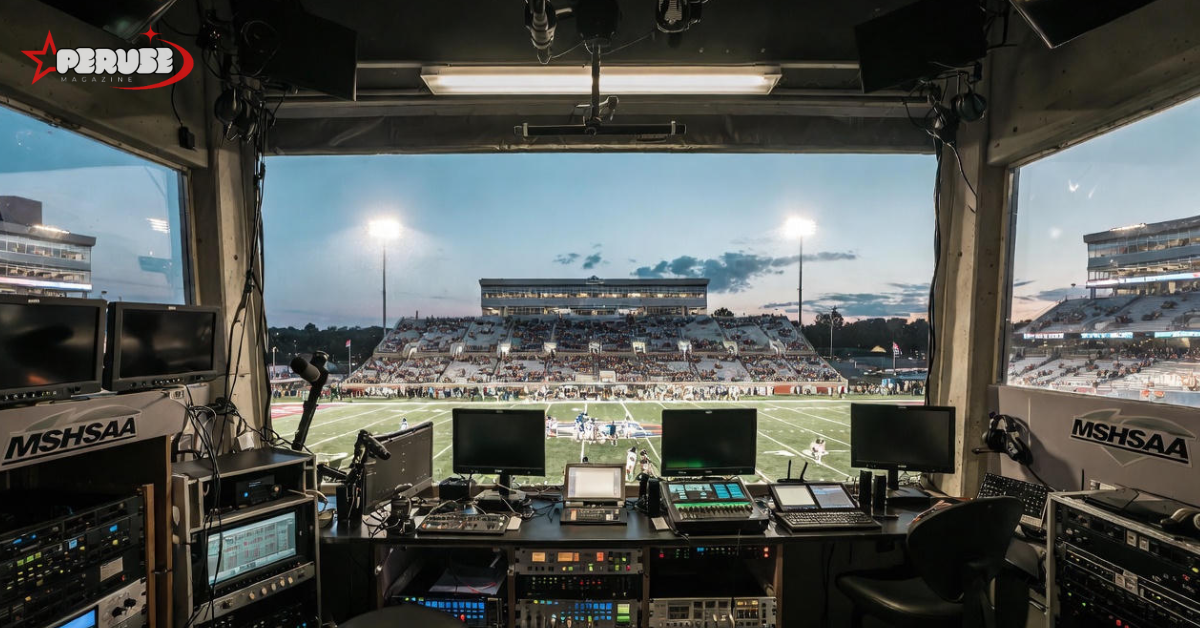
Introduction: Understanding the MSHSAA Football Broadcast Apology
The MSHSAA football broadcast apology represents a pivotal moment in high school sports media. In December 2024, the Missouri State High School Activities Association took the unprecedented step of interrupting its own Class 6 state championship broadcast to publicly apologize for biased commentary and remove a commentator mid-game. This incident, involving Nixa High School and De Smet Jesuit High School, exposed the fragile balance between passionate sports broadcasting and the protective environment student-athletes deserve.
What makes this event significant isn’t just the controversial remarks themselves, but how MSHSAA responded in real-time. While professional sports leagues often issue carefully worded statements days after controversies, MSHSAA’s executive director appeared live during halftime—a move that sparked nationwide conversations about accountability, broadcast standards, and the unique vulnerabilities of high school athletes in the digital streaming era.
What Happened During the Class 6 State Championship Broadcast
The December 6, 2024 Game Setup
The stage was set at Faurot Field in Columbia, Missouri, where Nixa Public Schools faced De Smet Jesuit High School for the Class 6 state title. As one of the most anticipated matchups of the year, the game drew thousands of viewers through MSHSAA.tv, the association’s streaming platform that has expanded access to championship events statewide.
The broadcast team consisted of veteran play-by-play announcer James Stanley and color analyst Cam Thomas, a partnership that had previously called college basketball games. For the first half, everything appeared routine—until viewers began noticing patterns in Thomas’s commentary that deviated sharply from expected scholastic sports professionalism.
The Commentary That Triggered Controversy
The issues began accumulating during the opening quarters. Thomas’s analysis consistently exhibited several problematic elements:
- Overly critical language: He labeled a deep incomplete pass by a student-athlete as “unacceptable”—a term considered harsh for developing teenage players
- Perceived team favoritism: Multiple remarks suggested De Smet’s superiority due to its private school status, including the statement: “This is why you don’t mess with St. Louis private school high school football teams”
- Play-by-play overanalysis: Rather than celebrating championship-caliber play, Thomas dissected each mistake with a critical lens uncommon for high school coverage
- Dismissive tone toward Nixa: Public school athletes received notably less generous commentary, creating an imbalance that viewers quickly detected
Within minutes, Twitter and Facebook groups lit up with clips and complaints. Parents texted the Springfield News-Leader directly, expressing concern that the broadcast had shifted from celebration to harsh critique.
The Halftime Intervention Timeline
By halftime, the social media amplification reached a tipping point. MSHSAA leadership, monitoring viewer feedback in real-time, made the extraordinary decision to act immediately. During the break between halves, staff informed Cam Thomas he would not return to the broadcast booth. James Stanley would continue solo, a challenging situation for any announcer midway through a state championship.
The technical execution required coordination between broadcast engineers, on-site producers, and MSHSAA executives—all while thousands of viewers watched the halftime show, unaware of the behind-the-scenes activity.
Who Was Involved: Key Figures in the Incident
The Broadcast Team
James Stanley demonstrated remarkable professionalism by continuing the broadcast alone for the entire second half. His experience calling games for Lincoln University proved invaluable as he smoothly transitioned from a two-man booth to solo commentary, maintaining game flow while avoiding the issues that prompted his partner’s removal.
Cam Thomas became the center of the controversy. Though his background included collegiate basketball broadcasts, the high school football environment presented different expectations. Community members quickly identified him through social media, with limited public information about his credentials or prior relationship with either school. His commentary style, while potentially acceptable at higher competitive levels, clashed with the protective, educational ethos of scholastic athletics.
MSHSAA Leadership Response
Dr. Jennifer Rukstad, MSHSAA’s Executive Director, took personal responsibility for addressing viewers. Her appearance on-camera during halftime marked a departure from typical association protocol, where directors rarely insert themselves into live broadcasts. Rukstad’s statement emphasized core values: “Our members are all in equal standing. We respect all our teams, no matter where they come from.”
This direct engagement demonstrated transparent governance in action. Rather than delegate the response to a communications staffer, the highest-ranking official delivered the message personally—a choice that significantly impacted public perception of MSHSAA’s sincerity.
The Live On-Air Apology: A Word-for-Word Breakdown
Dr. Rukstad’s Halftime Statement
As the third quarter commenced, viewers saw Dr. Rukstad join James Stanley in the broadcast booth. Her prepared statement, delivered without notes, contained several crucial elements:
“I wanted to talk to everyone who purchased this broadcast: We needed to make a change here at halftime. I want you to hear my personal apology about some of the things that were communicated in the first half. I wanted to let all of our viewers know that our members are all in equal standing. We wanted to let our viewers know that we take our broadcast seriously. We respect all our teams, no matter where they come from.”
The brevity and directness stood out. In under 60 seconds, she acknowledged the change, took personal responsibility, affirmed organizational values, and reinforced commitment to fairness—all while the championship game continued in the background.
What Made This Apology Unprecedented
Sports organizations typically follow a damage-control playbook: issue a written statement hours or days later, promise internal review, and provide minimal transparency. MSHSAA’s approach broke this mold in several ways:
- Real-time correction: Acting during the event prevented narrative solidification
- Visual accountability: Putting leadership on-camera added weight absent from press releases
- Immediate action: Removing Thomas demonstrated consequences, not just words
- No deflection: The apology focused entirely on the association’s failure to meet standards
This approach reflected modern crisis communication principles adapted for the streaming era, where social media spreads criticism instantaneously and silence permits narrative control to slip away.
Public and Community Reaction Analysis
Immediate Social Media Response
The digital response unfolded in distinct phases:
During the game: Twitter users posted timestamps and quotes from Thomas’s commentary. Facebook groups for both schools shared clips with commentary about the perceived bias. The hashtag #MSHSAAapology began trending locally within 30 minutes.
Post-game: Reaction videos from parents and students appeared on TikTok. Sports forums debated whether the response was appropriate or an overreaction. Local journalists compiled tweet threads documenting the timeline.
Next-day amplification: Regional sports blogs picked up the story, national outlets like Awful Announcing provided coverage, and the incident became a case study in broadcast ethics discussions.
Stakeholder Perspectives
Nixa community members felt vindicated by the apology but remained frustrated that their student-athletes experienced disrespect during a championship moment. Many questioned whether the broadcast could be re-edited for archival purposes, preserving the game while removing problematic commentary.
De Smet supporters expressed mixed feelings. While some appreciated Thomas’s recognition of their program’s quality, others understood that the bias created an uncomfortable situation that diminished their legitimate victory.
Student-athletes from both teams later reported feeling awkward during the broadcast, with some players hearing about the controversy from parents in the stands during the game itself—creating an additional distraction during their championship performance.
Coaches’ responses revealed professional solidarity. Nixa’s coach appreciated the swift correction, while De Smet’s coach noted the incident served as a teaching moment about handling victory with grace when the playing field isn’t level.
Analyzing the Bias: What Went Wrong in the Booth
The Line Between Passion and Partiality
High school sports commentary operates under fundamentally different principles than professional broadcasting:
- Developmental focus: Student-athletes are still developing physically, mentally, and emotionally
- Educational mission: Every broadcast reinforces or undermines educational values
- Community sensitivity: Local commentators often have personal connections requiring extra vigilance
- Confidence impact: Teenage athletes internalize criticism more deeply than seasoned professionals
Thomas’s critical approach, while standard in NCAA or NFL analysis, crossed these boundaries repeatedly. Calling a high school player’s mistake “unacceptable” doesn’t provide teachable insight—it delivers harsh judgment to a minor learning the game.
Technical Breakdown of Problematic Commentary
Broadcasting professionals analyzing the incident identified specific failures:
Evaluative language: Using “good/bad” judgments rather than explanatory analysis
Comparative framing: Repeatedly positioning teams hierarchically rather than describing competitive dynamics
Emotional interpretation: Speculating about player psychology instead of describing observable actions
Allegiance signaling: Language choices that revealed preference regardless of intent
The cumulative effect transformed the broadcast from a neutral document of a championship to a subjective critique session.
Psychological Impact on Student-Athletes
Research on adolescent development highlights why high school athletes require protective commentary standards:
- Identity formation: Teen athletes often tie self-worth to performance
- Fixed mindset risk: Harsh criticism can create belief that ability is static rather than improvable
- Social anxiety: Public negative evaluation in front of peers and community compounds normal teenage social pressures
- Long-term participation: Negative experiences with media scrutiny may discourage continued athletic participation
Broadcast accountability isn’t just about fairness—it’s about safeguarding the developmental experience sports provide.
MSHSAA’s Official Actions and Accountability Measures
Immediate Post-Game Steps
Within hours of the game’s conclusion, MSHSAA executed several corrective actions:
Broadcast removal: The full game replay disappeared from MSHSAA.tv, preventing further distribution of the problematic commentary. This decision balanced transparency with protection, acknowledging that student-athletes shouldn’t be permanently associated with demeaning comments.
Internal documentation: Staff compiled timestamp logs of concerning remarks to support potential disciplinary action and training development.
Partner notification: MSHSAA contacted its broadcast production partner to review contractual performance expectations and technical oversight failures.
Disciplinary Decisions
MSHSAA faced a complex decision regarding Cam Thomas’s future. Options included:
- Termination: Severing the relationship entirely
- Suspension: Temporary removal with required training
- Reassignment: Limiting him to sports where his style fits better
- Probation: Close supervision of future broadcasts
The association’s choice remained private, balancing transparency obligations against employment privacy rights. This restraint demonstrated mature governance—addressing the public concern while protecting individual due process.
Policy Reforms: MSHSAA’s New Broadcasting Standards
Announced Training Initiatives
Dr. Rukstad outlined specific improvements to prevent recurrence:
Neutrality certification: All commentators must complete training on scholastic sports impartiality, including case studies of this incident. The curriculum covers language choice, tone management, and recognizing unconscious bias.
Student-athlete development education: Broadcasters learn about adolescent psychology, understanding their words’ impact on teenage confidence and long-term athletic participation.
Mshsaa values integration: Training explicitly connects broadcast professionalism to the association’s core principles of respect, fairness, and integrity.
Annual refresher requirements: Unlike one-time onboarding, commentators must renew certification each season to maintain current standards.
Structural Changes to Broadcast Oversight
Live oversight protocols: MSHSAA now stations a communications staff member in production booths during championship events. This person monitors commentary in real-time and can alert directors to concerning patterns before they escalate.
Rotation policies: To prevent team familiarity bias, commentators face restrictions on how frequently they can cover the same schools. This breaks echo chambers where analysts develop inside knowledge that creates unconscious allegiances.
Performance review integration: Broadcast quality now factors into vendor contract renewals, creating financial incentives for production partners to maintain high standards.
Feedback Mechanism Implementation
Public reporting system: MSHSAA established a dedicated email and web form for broadcast concerns, monitored during live events. This gives viewers direct influence previously limited to social media complaints.
Social media listening tools: Staff use monitoring software to track broadcast-related keywords, enabling earlier identification of emerging issues.
Response time standards: The association committed to acknowledging viewer concerns within one hour during live events, preventing the silence that allows frustration to build.
Broader Context: High School Sports Broadcasting Landscape
The Growth of Live-Streaming Scholastic Sports
The MSHSAA football broadcast apology occurred during a period of rapid expansion in high school sports media:
Platform accessibility: MSHSAA.tv subscriptions increased as families sought ways to watch games post-pandemic, expanding audiences beyond local radio reach.
Production value gap: While viewership grew, training and oversight didn’t scale proportionally, creating situations where amateur commentators reached regional audiences without scholastic-specific preparation.
Revenue implications: Streaming revenue helps fund athletic programs but also raises questions about monetization versus educational mission priorities.
Comparison: Professional vs. Scholastic Broadcasting Ethics
Professional sports operate under different social contracts:
Player agency: Adult professionals choose careers knowing media scrutiny is part of the job. High schoolers have no such agency—their participation is often parent-driven or graduation-required.
Performance expectations: Professional mistakes cost salaries and careers. High school errors are learning opportunities that shouldn’t define a teenager’s identity.
Community role: Professional commentators serve entertainment and analysis functions. Scholastic broadcasters represent educational institutions and shape community values.
The MSHSAA incident highlighted why applying professional broadcasting norms to high school sports creates ethical mismatches.
National Precedents and Similar Incidents
Other state associations have faced comparable challenges:
Texas UIL dealt with racially insensitive comments during a basketball broadcast, leading to resignations and policy reviews.
California Interscholastic Federation encountered issues with commentators placing bets on games they covered, prompting strict gambling disclosure rules.
Florida High School Athletic Association managed a controversy where announcers discussed student-athletes’ academic records on-air, violating privacy protections.
Each case reinforced that scholastic broadcasting requires unique governance frameworks distinct from professional sports media.
Long-Term Implications for Scholastic Athletics
Impact on MSHSAA’s Credibility
The association’s transparent response paradoxically strengthened community trust:
- Immediate ownership: Admitting failure without excuses built authenticity
- Visible action: Removing Thomas demonstrated commitment over words alone
- Proactive reform: Announcing concrete changes prevented this from appearing as damage control
School administrators reported increased confidence in MSHSAA’s ability to handle crises, contrasting with typical bureaucratic delay patterns.
Industry-Wide Ripple Effects
The incident catalyzed national discussions:
NFHS guidance: The National Federation of State High School Associations began drafting model broadcast standards for member organizations, using MSHSAA’s response as a template.
Insurance considerations: Liability carriers started offering specific scholastic broadcast coverage, recognizing unique risks of youth athlete media exposure.
Broadcast partner vetting: Other states enhanced credential requirements, demanding experience with youth sports specifically, not just general announcing ability.
Future of Fan Engagement in High School Sports
The controversy reshaped how associations think about audience experience:
- Expectation setting: Pre-game announcements now explicitly state broadcast standards, helping viewers understand what behavior to expect
- Moderated chat features: Live stream comment sections gained active moderation to prevent viewer commentary from becoming as problematic as the broadcast itself
- Community commentator rethinking: The traditional practice of using local personalities with team connections faces increased scrutiny about potential bias
Frequently Asked Questions
What specific comments led to the MSHSAA football broadcast apology?
The most cited remark involved Thomas calling a deep incomplete pass “unacceptable” from a high school quarterback. Other problematic statements included favoring De Smet’s private school status and broadly criticizing play execution rather than explaining strategic elements.
Who is Cam Thomas and what was his role in the broadcast?
Cam Thomas served as color analyst alongside play-by-play announcer James Stanley. He had previously called Lincoln University basketball games. As a color analyst, his job was providing tactical insight and background context, not delivering harsh evaluations of teenage athletes.
Why was the apology delivered live during the game rather than afterward?
Social media complaints reached critical mass by halftime, and MSHSAA recognized that allowing biased commentary to continue would cause greater harm. The live approach demonstrated immediate accountability and prevented the second half from compounding the problem.
Was the commentator officially fired by MSHSAA?
Mshsaa has not publicly disclosed Thomas’s employment status, balancing transparency against personnel privacy. The association confirmed his removal from the championship broadcast but hasn’t detailed any subsequent disciplinary measures.
How did the athletes and coaches from Nixa and De Smet respond?
Coaches appreciated MSHSAA’s swift correction while noting the distraction created for players. Athletes reported feeling uncomfortable knowing commentary about their performance had become controversial, though both teams remained focused on the game itself.
What changes has MSHSAA implemented to prevent future broadcast bias?
Key changes include mandatory neutrality training for commentators, live broadcast monitoring by communications staff, rotation policies to prevent team familiarity bias, and formal systems for viewer feedback during live events.
How does this incident compare to broadcast controversies in professional sports?
Unlike professional leagues that often issue delayed statements, MSHSAA’s real-time intervention was unprecedented. Professional athletes have greater media resilience, while high schoolers require protective environments, making scholastic broadcasting standards necessarily stricter.
Where can I watch or listen to the original broadcast?
Mshsaa removed the full game replay from its website following the incident. Short clips remain available through social media posts and news coverage, but the association hasn’t re-released an edited version, prioritizing student-athlete protection over archival completeness.
Conclusion: Key Takeaways from the MSHSAA Broadcast Apology
The MSHSAA football broadcast apology transcended a single moment of poor commentary to become a defining case study in scholastic sports governance. Three core lessons emerged:
Accountability requires speed. In the digital age, waiting hours to address public concerns allows narratives to harden and trust to erode. MSHSAA’s willingness to interrupt its own championship demonstrated that protecting student-athletes outweighs broadcast smoothness.
Standards must match the environment. Commentary acceptable for college or professional athletes can damage high schoolers. Youth sports broadcasting demands protective guardrails that prioritize development over entertainment value.
Transparency builds trust. By placing executive leadership on-camera mid-crisis, MSHSAA transformed a potential credibility disaster into a trust-building moment. The community witnessed an organization living its values rather than merely stating them.
For families, coaches, and administrators across Missouri and beyond, this incident provided reassurance that scholastic athletic associations recognize their duty extends beyond rule enforcement to safeguarding the entire student-athlete experience—including how young athletes experience public commentary about their efforts.
The ripple effects continue influencing how state associations negotiate broadcast contracts, train personnel, and balance community passion for high school sports against the vulnerability of the teenagers who make these events meaningful. In choosing accountability over appearances, MSHSAA set a standard that other scholastic sports organizations now seek to emulate.