

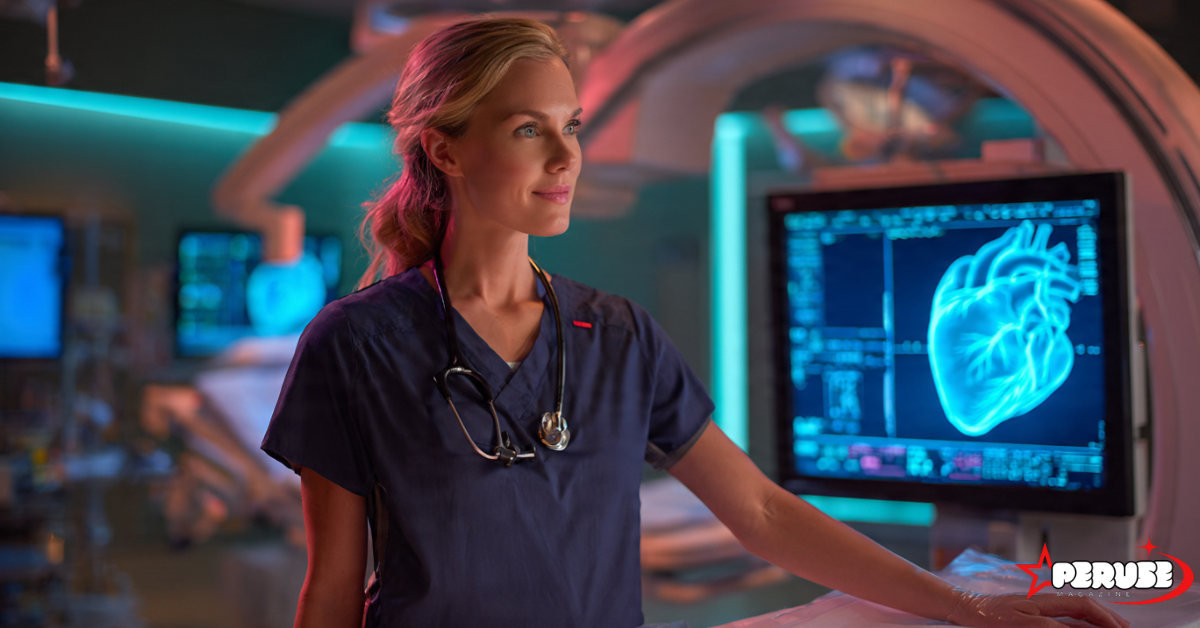
The morning started like any other until it wasn’t. You’re sitting in a waiting room, tapping your foot, while a nurse tells you your dad is being prepped for a cardiac catheterization. Through the double doors, you catch a glimpse of a calm, focused person in scrubs arranging what looks like tiny wires and monitors, chatting softly to your dad before the procedure. That person isn’t the surgeon. They’re not the nurse manager. They’re the cath lab technician the professional who will literally hold your dad’s heart health in their hands today.
If that scene makes you think, I want to be that person. The one who brings both technical mastery and human comfort to a terrifying moment, you’re not alone. Every year, thousands of people discover the cath lab tech career through personal experience, late-night research, or that moment of clarity in a hospital hallway. And in 2025 with cardiovascular disease still the leading cause of death globally, yet more treatable than ever this role is becoming one of the most in-demand, life-affirming careers in allied health.
But what is a cath lab technician, really? Beyond the dramatic TV hospital scenes and medical jargon, what do they do, how do you become one, and is it the right fit for your life? Let’s walk through this together, step by step.
💡 Health Snapshot: Cath Lab Technician Career
- Health Topic: Cardiovascular Invasive Technology
- Main Benefit: Directly saves lives through emergency & preventive cardiac care
- Expert Tip: “Shadow a tech for one day it’ll tell you more than 100 articles.” – Maria T., RCIS, Miami
- Ideal For: Detail-oriented problem-solvers who thrive in teams and stay cool under pressure
- Backed By: Bureau of Labor Statistics, Cardiovascular Credentialing International (CCI)
What Does a Cath Lab Technician Actually Do?
Picture this: a sterile room humming with monitors, the soft glow of fluoroscopy screens, and a team of four people moving in synchronized focus. The cardiologist is at the table, but the cath lab technician is the one ensuring every piece of equipment is perfectly positioned, every reading is accurate, and the patient is stable enough for the next move.
In the simplest terms, a cath lab technician officially called a Cardiovascular Invasive Specialist (RCIS) assists physicians during cardiac catheterization procedures. These are minimally invasive tests and treatments where thin tubes (catheters) are threaded through blood vessels to diagnose or treat heart conditions. But “assist” barely covers it. You’re the cardiologist’s second set of hands, the patient’s quiet advocate, and the equipment’s obsessive caretaker.
There are two sides to this job. On diagnostic days, you might help perform a coronary angiogram to see if someone’s chest pain is coming from a blocked artery. You’ll set up the catheters, inject contrast dye, capture fluoroscopy images, and watch the patient’s vitals like a hawk. On interventional days think heart attacks you’re in high gear: assisting with balloon angioplasties to open blocked vessels, deploying stents to keep them open, or even helping with emergency devices that restart a failing heart.
Where you fit in the team is crucial. You’re not just following orders; you’re anticipating them. When the cardiologist needs a specific catheter size, you’ve already got it open. When the patient’s blood pressure dips, you’ve spotted the trend on the monitor before anyone says a word. It’s a dance, and you’re an essential partner.
[Discover how high-pressure healthcare roles manage stress with our guide: [Stress Management Tips for High-Pressure Healthcare Roles]()] – because yes, this job will test your calm
7 Core Responsibilities That Define the Role
Let’s get concrete. What will you actually do during a 10-hour shift? These seven responsibilities are your daily bread and butter:
1. Patient Prep & Education
Before the procedure, you’re often the first face the patient sees in the lab. They’re scared. Maybe they’ve never had surgery. Your job? Explain what will happen in plain language why they’ll feel pressure at the wrist or groin, what that “warm flush” from the contrast dye feels like, and that you’ll be there the whole time. You’ll also get informed consent, verify medications, and document everything. It’s part medical, part therapy.
2. Sterile Field & Equipment Mastery
One speck of contamination can cause a life-threatening infection. You’ll become obsessive about sterile technique gowning, gloving, creating a sterile field, and laying out instruments with surgical precision. You’ll know every catheter, wire, and device by touch, even in a dim room. When seconds count, you can’t fumble.
3. Real-Time Monitoring
You’re glued to the monitors EKG rhythms, arterial pressures, oxygen saturation. You’ll recognize the signature pattern of a dangerous arrhythmia or a sudden pressure drop that signals internal bleeding. It’s like being an air traffic controller, but for one very important heart.
4. Assisting During Emergencies
When a patient codes in the cath lab, there’s no time for panic. You’ll administer emergent meds, assist with chest compressions, prep devices like intra-aortic balloon pumps, and communicate with the team in clipped, clear statements. It’s adrenaline and training, fused.
5. Imaging & Fluoroscopy Support
You’ll operate the C-arm the X-ray machine that creates real-time images of the heart. This means positioning it perfectly, minimizing radiation exposure for everyone, and capturing the exact angle the cardiologist needs to see the blockage. It’s technical artistry.
6. Post-Procedure Care
After the procedure, you’re not done. You’ll apply pressure or closure devices to the access site, monitor for bleeding, check pulses, manage pain, and transfer the patient safely. You’ll also document every detail for the medical record accuracy is non-negotiable.
7. Quality Control & Inventory
The lab runs on your prep. You’ll test equipment daily, ensure supplies are stocked, and track expiration dates on devices worth thousands of dollars. If something fails mid-procedure, you’re the one who catches it during morning checks.
Cath Lab Tech vs. Cardiovascular Technologist: Key Differences
Here’s where people get tripped up the titles sound interchangeable, but they’re not. A cardiovascular technologist is a broader umbrella term. Some specialize in noninvasive work: stress tests, EKGs, echocardiograms. They’re using ultrasound, not catheters.
A cath lab technician (RCIS) is invasive. You’re inside the blood vessels. The training is more specialized, the stakes are higher, and the certification (RCIS) is distinct. It’s like the difference between a photographer and a drone operator both create images, but one works in more complex, high-risk environments.
Education differs too. Cardiovascular technologists may enter with a one-year certificate. Cath lab techs almost always need an associate degree, plus clinical hours specifically in an invasive lab. The pay reflects this—RCIS-certified techs typically earn 15–20% more.
[Trying to decide between allied health paths? Read our comparison: [Radiology Tech vs. Ultrasound Tech: Which Path Fits You?]()]
How to Become a Cath Lab Technician: The Step-by-Step Path
So you’re intrigued. How do you actually get there? Let’s map it out, because the path is clearer than most medical careers—and faster than becoming a nurse or doctor.
Step 1: Earn an Associate Degree in Cardiovascular Technology (2 Years)
Look for a program accredited by the Commission on Accreditation of Allied Health Education Programs (CAAHEP). You’ll study anatomy, physiology, pharmacology, and hemodynamics. You’ll learn to recognize heart rhythms, understand cardiac medications, and master radiation physics. It’s intense, but most programs have small cohorts you’ll bond with classmates like family.
Step 2: Complete Clinical Rotations in a Hospital Cath Lab (6–12 Months)
This is where book knowledge becomes muscle memory. You’ll start observing, then gradually assist with simpler tasks. By the end, you’ll be managing cases under supervision. Many students get hired directly from their clinical site performance matters more than GPA here.
Step 3: Pass the RCIS Exam (Registered Cardiovascular Invasive Specialist)
Offered by Cardiovascular Credentialing International (CCI), this 170-question exam costs $365 and covers everything from sterile technique to emergency protocols. The pass rate is around 70%, so study hard. Some employers will reimburse you after you pass ask during interviews.
Step 4: Optional: State Licensure (Check Your State)
Not all states require a license, but more are moving that way. Texas, for example, requires RCIS certification plus state registration. Always check your local regulations.
Step 5: Gain 1–2 Years Experience, Then Specialize
With experience, you can branch into electrophysiology (heart rhythm procedures), pediatric cath labs, or interventional radiology. Travel cath lab techs a booming niche can earn double the salary, hopping between hospitals on 13-week contracts.
Can you enter with a certificate program? Yes, but it’s harder. Certificate grads often need to prove more clinical hours to sit for the RCIS exam, and they may start at lower pay. If you already have a healthcare background (EMT, radiology tech), a certificate can be a fast-track.
Salary & Job Outlook: Is It Worth It in 2025?
Let’s talk numbers—because passion doesn’t pay rent, but this career can comfortably cover it.
The median salary for cardiovascular technologists and technicians (the BLS groups them) was $63,020 in 2024 . But here’s the nuance: RCIS-certified cath lab techs consistently earn above that median, often landing in the $70,000–$85,000 range within three years.
Top earners in high-demand states like Idaho ($102,000), Washington D.C. ($98,540), and Rhode Island ($95,000) are pulling six figures. Why Idaho? Rural hospitals pay premium rates to attract talent.
Travel cath lab techs are the hidden gem earning $1,800 to $3,000 per week (that’s $90,000–$150,000 annually if you work year-round). You get housing stipends, flexibility, and the chance to see the country. The trade-off? No stability, and you’re always the new person.
Job growth is projected at 10% over the next decade much faster than average. With an aging population, rising diabetes rates, and advances in minimally invasive heart procedures, demand is surging. Hospitals are so hungry for RCIS techs that many offer sign-on bonuses ($5,000–$10,000) and tuition reimbursement.
[For the full picture on healthcare salaries, check: [Healthcare Salaries in 2025: Where the Jobs Are]()] – it breaks down regional trends.
5 Must-Have Skills to Thrive in the Cath Lab
You can learn the technical stuff. But these five skills? They’re either in your DNA or you develop them fast.
1. Calm Under Pressure
When a patient’s coronary artery ruptures and blood pressure crashes, the room doesn’t get loud—it gets quiet and intense. Panic is contagious; so is calm. You’ll learn to slow your breathing, speak in measured tones, and trust your training. It’s a mental muscle you build with every emergency.
2. Surgical Precision
A catheter wire is measured in millimeters. One wrong move can perforate a vessel. You’ll develop a finesse that borders on artistic knowing exactly how much pressure to apply, when to twist, when to hold still. It’s like learning to thread a needle while riding a rollercoaster, but you get good at it.
3. Empathetic Communication
You’ll meet patients at their most vulnerable: flat on their back, naked under a gown, staring at the ceiling and wondering if they’ll see their kids again. Your ability to explain, “You’ll feel pressure, but it means we’re fixing the problem,” can be as healing as the procedure itself. It’s not fluff it’s patient safety. Calm patients have fewer complications.
4. Technical Agility
In one case, you’re toggling between fluoroscopy and pressure monitors. In the next, you’re running an intra-aortic balloon pump console. The equipment is sophisticated, and it evolves constantly. You need to be the person who reads the manual for fun, who watches YouTube tutorials on new devices, who geeks out over tech.
5. Team Synergy
A cath lab runs on unspoken communication. You learn the cardiologist’s preferences: Dr. Smith always wants the 6-French Judkins left catheter first; Dr. Chen likes the table raised two inches higher. You anticipate needs before they’re verbalized. It’s like being in a jazz ensemble where everyone’s instrument is critical, and the music is someone’s heartbeat.
A Day in the Life: Real Cath Lab Tech Stories
Meet James, RCIS, 29, Portland. He started as an EMT, drawn to adrenaline but burned out on trauma scenes. A shadow day in a cath lab changed everything.
“I walked in at 7:00 AM, and the lead tech was already testing the hemodynamic monitors, calibrating pressure transducers, humming along to a podcast. By 8:30, we’re in a STEMI widow-maker heart attack. The patient is 54, clutching his chest, terrified. I’m on vitals while handing catheters to the doc, and I see his artery open on the screen. The color returns to his face. By 9:00, he’s pain-free and thanking us. I was hooked.”
Noon: Quick lunch, then a pediatric case a 12-year-old with a congenital defect. “Different energy. You’re explaining everything to the parents, showing them the monitor, reassuring them.”
3:00 PM: Routine angiogram turns complicated. “We find three blockages. The patient’s wife is in the waiting room. I hold his hand while we call her, explain what’s next. He squeezes back.”
6:30 PM: End-of-day inventory. Restock, sterilize, document. “You leave knowing you moved the needle for five or six people. It’s exhausting, but it’s not burnout. It’s fulfillment.”
That’s the duality—high stakes, deep humanity.
[For mental wellness in demanding jobs, see: [Simple Morning Habits for Better Mental Health]()] – James swears by his 5-minute pre-shift meditation.
Frequently Asked Questions About Cath Lab Technician Careers
Is the job physically demanding?
Yes, but differently than you think. You’re on your feet for 10–12 hours, sometimes wearing 15-pound lead aprons during long cases. But the real strain is mental staying locked in for hours. Compression socks and gym sessions help. So does knowing when to ask for a break.
What’s the biggest challenge?
The learning curve is steep. For your first six months, you’ll feel like you know nothing. That’s normal. The other challenge? Death. Despite your best efforts, some patients don’t make it. You’ll debrief with your team, talk to a counselor, and learn to compartmentalize without becoming numb.
Can I specialize later?
Absolutely. After 2–3 years, you can cross-train into electrophysiology (ablations, pacemakers), structural heart (TAVR, MitraClip), or interventional radiology. Each specialty boosts your salary and marketability.
Do cath lab techs work nights and weekends?
Yes, but it’s usually on-call rotation, not regular shifts. Most full-time positions are days, but you’ll take turns carrying the emergency pager. STEMIs don’t clock out at 5 PM.
What if I’m squeamish around blood?
You’ll get over it fast or you won’t, and you’ll leave. Most techs say after the first week of seeing blood shoot across the room (yes, it happens), your brain rewires. You see anatomy, not gore.
Editor’s Note: Is This Your Next Chapter?
If you’ve read this far, something is clicking. Maybe it’s the blend of hands-on medicine without a decade of school. Maybe it’s the team camaraderie the inside jokes, the shared adrenaline, the way you celebrate small victories in the locker room after a tough case. Or maybe it’s the direct impact: knowing that at 9:47 AM on a Tuesday, you helped a grandfather see his granddaughter’s wedding.
This career isn’t for everyone. It demands precision when you’re tired, empathy when you’re stressed, and humility when you’re wrong. But for those who thrive in that space who want meaning now, not after years of residency—it’s incomparable.
Your first step is simple: Email a cardiac cath lab manager at your local hospital. Say, “I’m exploring this career. Could I shadow for half a day?” Most hospitals say yes because they need talent and remember being in your shoes. Bring a notebook, ask about RCIS certification, and notice how the team communicates. Notice how you feel when you see that first heart artery open on the screen.
If your pulse quickens with excitement not fear you might have found your people.
Health isn’t just about personal wellness. It’s about choosing work that makes you feel alive. What small step will you take today toward a career that keeps hearts beating?
Sources: Bureau of Labor Statistics Occupational Outlook Handbook (2024); Cardiovascular Credentialing International (CCI) RCIS Certification Data; Society for Cardiovascular Angiography and Interventions (SCAI) Workforce Report; Interview insights from practicing RCIS technicians in Oregon, Florida, and Washington D.C. (2025).