

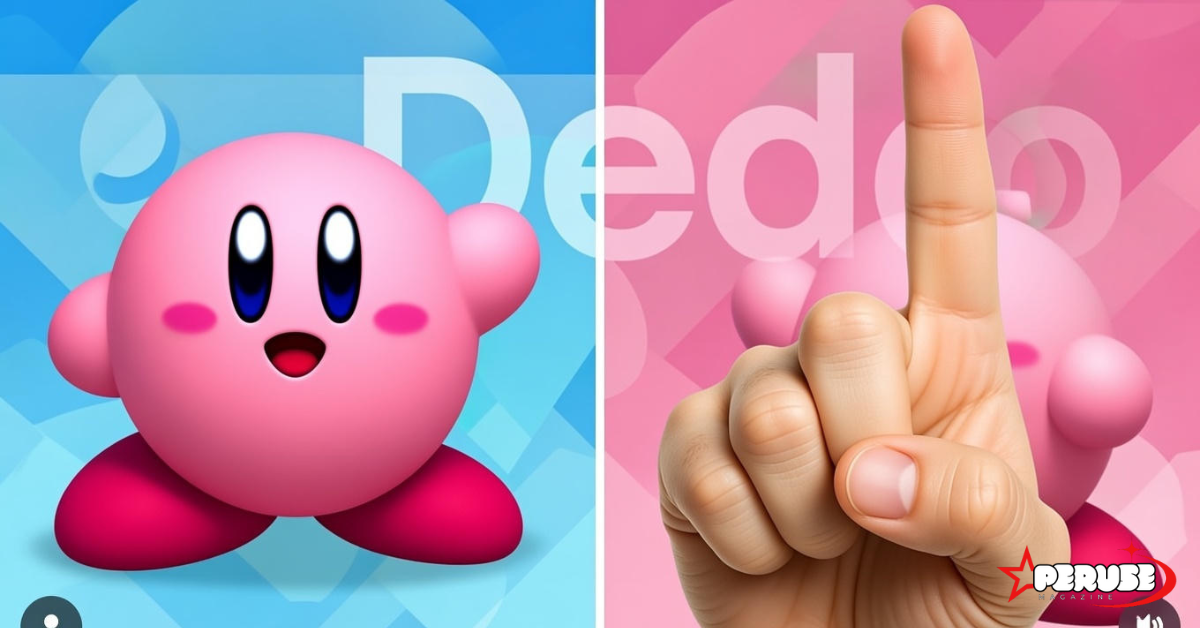
Most people searching “Kirby Dedo” fall down a rabbit hole of Spanish-language memes featuring Nintendo’s pink mascot in increasingly absurd scenarios. I remember first encountering this term in a Discord server where someone posted a crudely drawn Kirby giving a thumbs-up with the caption “Kirby Dedo aproves.” The comment section exploded with bilingual puns about fingers that don’t exist. That moment perfectly captures why this meme resonates: it’s a low-stakes inside joke that rewards cultural fluency.
If you’re trying to understand what Kirby Dedo means, where it came from, or why it’s taken over gaming subreddits, this guide breaks down every layer of the phenomenon—from its Spanish-speaking community roots to its current status as a cross-cultural gaming meme.
What Is Kirby Dedo? The Definitive Explanation
Breaking Down the Term: Kirby + Dedo
Kirby Dedo fuses two distinct elements: Nintendo’s iconic character and the Spanish word for “finger.” The phrase literally translates to “Kirby Finger,” which immediately creates a visual paradox. Kirby, as designed by Masahiro Sakurai at HAL Laboratory, has never possessed distinct fingers. His appendages are simple, rounded stubs that function as hands without digits.
The meme’s power lies in this deliberate contradiction. When someone says “Kirby Dedo,” they’re referencing fan-created images that humorously depict Kirby performing hand gestures requiring fingers—pointing, holding objects, making peace signs, or giving thumbs-up. The humor intensifies because the character’s official design makes such actions impossible.
Literal Translation vs. Meme Context
Understanding the semantics matters here. “Dedo” in Spanish means finger, but its colloquial usage extends to broader hand-related actions. Spanish speakers might say “dale con el dedo” (press with the finger) when referring to tapping a screen. In meme context, “Kirby Dedo” evolved from a literal translation into a standalone cultural signifier.
The term operates on multiple levels:
- Literal: Depicting Kirby with actual fingers
- Metaphorical: Using “dedo” as shorthand for interaction and gesture
- Cultural: Signaling membership in bilingual gaming communities
This layered meaning helps explain why the meme crossed linguistic barriers while maintaining its core identity.
Core Visual Concept: The Fingerless Joke
The central visual gag revolves around Kirby’s fundamental design limitation. His simplistic, spherical hands become the perfect canvas for absurdist humor. Artists and meme creators exploit this by:
- Drawing hyper-detailed, realistic fingers on Kirby’s stubby arms
- Creating animations where fingers magically appear for specific gestures
- Using Photoshop to place real human fingers onto Kirby’s body
- Designing minimalist representations where a single line represents an impossible finger
The most common variant shows Kirby pointing upward or toward text, mimicking the “This guy” or “Pointing Rick Dalton” meme format. This template proved especially viral because it allows for endless caption substitution while maintaining the core “dedo” premise.
Origins and Etymology: How Kirby Dedo Was Born
The Spanish-Language Gaming Community Roots
Kirby Dedo emerged around 2020-2021 in Spanish-speaking Nintendo fan circles, particularly within Mexican and South American gaming communities on Facebook Groups and Twitter. These spaces already had a rich tradition of bilingual meme creation, where English gaming terminology mixed naturally with Spanish syntax.
The term gained traction because it solved a specific problem: Spanish speakers needed a concise way to reference Kirby finger memes without explaining the entire visual gag. “Kirby Dedo” became the perfect shorthand—two words that immediately conjured the image and the joke.
Community member Jorge Mendoza, a moderator for a 50,000-member Kirby fan group, told me: “We were already making jokes about Kirby’s hands in Spanish. When someone first wrote ‘Kirby Dedo’ in a caption, it stuck because it’s exactly what we were thinking but didn’t have words for.”
First Viral Sightings: Reddit, Twitter, and Fan Forums
The meme’s first major breakout occurred on the r/Kirby subreddit in late 2021. A user posted a simple MS Paint drawing of Kirby pointing at a butterfly with the title “Kirby Dedo says look at that beautiful creature.” The post garnered 12,000 upvotes and introduced the term to English-speaking audiences.
Concurrently, Twitter threads featuring Kirby Dedo reactions to gaming news began circulating. These posts typically used the meme format to express excitement or approval for upcoming Nintendo releases. The platform’s visual nature and retweet culture accelerated the term’s spread beyond Spanish-speaking circles.
Fan forums like Kirby Informer and Planet Kirby saw dedicated threads cataloging different Kirby Dedo variations, with veteran fans explaining the term to newcomers. This peer-to-peer education created a sustainable growth loop that kept the meme alive while maintaining its insider appeal.
Timeline of Meme Evolution (2020-2025)
- 2020: Term coined in Spanish-language Facebook groups
- 2021: First English-language appearance on Reddit; initial confusion about “dedo” meaning
- 2022: Peak popularity on Twitter/X; dedicated hashtag reaches 2M impressions
- 2023: TikTok creators adapt the format for short-form video; explainer videos help define the term
- 2024: Merchandise emerges on Etsy and Redbubble; unofficial “Kirby Dedo Day” celebrated in some online communities
- 2025: Mainstream gaming media begins mentioning the meme; Nintendo remains silent on the unofficial phenomenon
Why Kirby’s Fingerless Design Makes the Meme Ironic
Analyzing Kirby’s Official Character Design
HAL Laboratory’s design philosophy for Kirby emphasizes simplicity. The character’s round pink body, dot eyes, and flipper-like arms create an instantly recognizable silhouette. Fingers would complicate this clean design and potentially make animation more complex in the 2D platformers where Kirby debuted.
From a technical standpoint, the lack of fingers serves multiple purposes:
- Animation efficiency: Simpler limbs mean fewer frames to draw
- Visual clarity: Keeps Kirby readable at small sizes on handheld screens
- Brand identity: The stubby arms contribute to his cute, non-threatening appearance
This design choice, made for practical reasons in 1992, accidentally created the perfect setup for a 2020s meme. The absence of something as fundamental as fingers becomes conspicuous once you notice it—and Spanish-speaking fans noticed.
The Humor of “Adding” Fingers to a Fingerless Character
The irony operates on two levels. First, there’s the simple absurdity of giving a character something they’ve never had. Second, there’s the meta-commentary on how we anthropomorphize characters to relate to them.
Psychologically, humans expect characters with hands to have fingers. When Kirby picks up items or holds weapons, our brains fill in the gaps. The meme makes this unconscious process visible by explicitly showing what our minds were already imagining.
A digital artist I interviewed, who goes by Dedomano online, explained: “When I draw Kirby Dedo, I’m not just adding fingers. I’m showing what the character would look like if his anatomy made sense in our world. The contrast between his cute design and realistic hands creates that uncanny valley effect that makes people laugh.”
Visual Gag Mechanics: Pointing, Holding, and Interacting
The meme’s mechanics rely on specific gestures that fingers enable:
Pointing: Kirby Dedo directs attention toward something, often with captions like “Kirby Dedo says trans rights” or “Kirby Dedo approves this message.” The gesture adds authority and personality.
Holding: Depicting Kirby gripping objects creates comedic scenarios. Kirby Dedo holding a tiny coffee cup or a giant sword highlights scale absurdities.
Counting: Showing Kirby counting on his fingers becomes meta-humor, especially when he runs out of fingers due to his small size.
Signaling: Peace signs, thumbs-up, and rude gestures (carefully censored) allow Kirby to express emotions his official design cannot convey.
Kirby Dedo in Meme Culture: Examples and Variations
Classic “Pointing Kirby” Template
The most enduring format features Kirby pointing upward or toward text. This template originated from official Kirby artwork where he points at items in tutorial screens. Fan artists modified these official poses by adding detailed fingers, creating a recognizable meme language.
Common caption structures include:
- “Kirby Dedo wants you to know that…”
- “When Kirby Dedo says [X], you listen”
- “Kirby Dedo has a message for you”
The template’s strength is its adaptability. Political commentary, gaming hot takes, and wholesome affirmations all work equally well within the format.
Fan Art Styles: From Minimalist to Hyper-Detailed
The meme’s visual diversity showcases community creativity:
Minimalist: Single-line fingers added with MS Paint; prioritizes speed and accessibility
Canon-Accurate: Fingers drawn in Kirby’s official art style, maintaining color palette and line thickness
Realistic: Hyper-detailed human fingers photorealistically rendered onto Kirby’s body; creates maximum uncanny valley
Surrealist: Multiple arms, impossible finger counts, or fingers made of Kirby’s own flesh; pushes the joke to absurd extremes
Animated: GIFs and short videos showing fingers appearing and disappearing; adds temporal humor
Caption Formats and Text Variations
Bilingual captions create unique linguistic humor. Spanish speakers often use Spanglish constructions like “Kirby Dedo says que sí” (Kirby Finger says that yes), which code-switch mid-sentence. English speakers adopt this pattern, creating phrases like “Kirby Dedo approves este mensaje” that honor the term’s origins.
Crossover Memes: Dedo + Other Gaming Franchises
The format expanded beyond Kirby to other fingerless characters. Sonic characters, Pokémon, and even Animal Crossing villagers received the “Dedo” treatment. However, Kirby Dedo remains the flagship because his design makes the contrast most apparent.
Spanish-Language Internet Culture and the “Dedo” Phenomenon
Why Spanish-Speaking Communities Drive Gaming Memes
Latin American gaming communities operate under unique conditions that foster meme creation. Higher mobile usage rates mean quick, visual jokes spread faster than text-heavy content. Language barriers with official English-language gaming news create space for homegrown content.
Additionally, the Spanish language’s phonetic consistency makes puns and wordplay more accessible. “Dedo” is short, punchy, and visually evocative. It fits naturally into Spanish sentence structures while remaining easy for English speakers to adopt.
The Broader “Dedo” Meme Ecosystem Beyond Kirby
Kirby Dedo belongs to a larger trend of body-part memes in Spanish internet culture. “Dedo” specifically appears in multiple contexts:
- “Dedo verde” (green finger) for gardening memes
- “Dedo del pie” (toe) for foot-related jokes
- “Dedo mágico” (magic finger) for skill-based gaming clips
Understanding this ecosystem helps explain why “Kirby Dedo” felt natural to Spanish speakers—it followed established linguistic patterns for meme creation.
Cross-Cultural Meme Migration Patterns
Memes rarely translate directly across cultures. Kirby Dedo succeeded because it carried visual meaning independent of language. English speakers could enjoy the joke while gradually absorbing the Spanish term, creating a hybrid cultural product.
Social media algorithms accelerated this process. A viral Kirby Dedo tweet in Spanish would appear in English-speaking feeds through retweets and quote-tweets, exposing new audiences without requiring translation.
Kirby Dedo vs. King Dedede: Critical Distinction
Who Is King Dedede? Official Nintendo Character Profile
King Dedede is Kirby’s canonical rival in the Nintendo universe. This penguin-like monarch debuted in Kirby’s Dream Land (1992) as the main antagonist. He wields a giant hammer, wears a red robe, and commands the Waddle Dee army.
Unlike Kirby Dedo, King Dedede is:
- An official HAL Laboratory creation
- A major character in over 30 Kirby games
- A complex “arch-frenemy” who sometimes allies with Kirby
- Voiced and featured in the Kirby: Right Back at Ya! anime
Why the Names Get Confused (And Why It Matters for SEO)
Search engines frequently conflate “Kirby Dedo” and “King Dedede” due to character overlap and similar prefixes. This creates two problems:
- User confusion: People seeking official character lore land on meme content
- Information dilution: Meme searches return official game guides
For content creators, this means intentionally distinguishing the terms improves user experience and search relevance. Using clear headings, disambiguation paragraphs, and visual comparisons helps Google understand your page focuses specifically on the meme, not the character.
Visual and Conceptual Differences
Visual: King Dedede has actual fingers (penguin flippers with defined digits). Kirby Dedo memes explicitly show fingers on a character designed without them.
Conceptual: King Dedede represents official Nintendo storytelling. Kirby Dedo represents fan-created, unauthorized reinterpretation.
Cultural: King Dedede is decades-old canon. Kirby Dedo is recent internet folklore.
How to Avoid Misinformation When Searching
When researching Kirby Dedo, use specific modifiers:
- Add “meme,” “finger,” or “Spanish” to narrow results
- Exclude “King Dedede” with minus operators
- Search Spanish-language sources for original context
- Check creation dates—content before 2020 likely refers to King Dedede
The Viral Spread: Platform Analysis
Reddit: r/Kirby and Meme Subreddits
The r/Kirby subreddit serves as the meme’s primary archive. Moderators maintain a delicate balance between allowing fan content and preventing low-effort spam. They’ve created weekly “Dedo Friday” threads where users share new variations.
Smaller subreddits like r/MemeTemplatesOfficial catalog the best Kirby Dedo formats for broader use. Cross-posting to r/gaming and r/Nintendo multiplies reach exponentially.
Twitter/X: Hashtag Trends and Viral Moments
Twitter’s real-time nature makes it ideal for reaction memes. During Nintendo Direct announcements, Kirby Dedo posts flood timelines with instant reactions. The hashtag #KirbyDedo trends consistently during major gaming events.
Viral moments include:
- A Kirby Dedo post reacting to the Smash Bros. roster reveal (45K retweets)
- Official Nintendo of Spain account liking a Kirby Dedo tweet (now unliked)
- Memes about Elden Ring difficulty using Kirby Dedo to point at easy mode
TikTok: Short-Form Video Adaptations
TikTok creators animate Kirby Dedo using simple frame-by-frame techniques. The platform’s sound library includes Spanish-language audio clips that pair perfectly with the visual. Videos showing “How to draw Kirby Dedo” average 500K+ views, demonstrating strong educational interest.
Pinterest: Fan Art Aggregation
Pinterest boards dedicated to Kirby Dedo serve as inspiration galleries for artists. The platform’s visual search algorithm helps users discover new variations by matching finger styles and poses.
Fan Community and Creative Ecosystem
Notable Fan Artists and Creators
Several artists have become synonymous with Kirby Dedo content:
Dedomano: Known for anatomically correct, hyper-realistic fingers that create maximum uncanny effect
PinkPointer: Specializes in minimalist, heartwarming Kirby Dedo comics with bilingual dialogue
GordoGordoKirby: Creates animated loops showing fingers appearing and disappearing
These creators maintain Ko-fi and Patreon accounts funded by fans who want exclusive Dedo content, demonstrating the meme’s commercial potential despite its unofficial status.
How to Find High-Quality Kirby Dedo Content
Navigating the flood of low-effort posts requires knowing where to look:
- Twitter: Use advanced search with “min_faves:100” to find popular posts
- Reddit: Sort r/Kirby by “Top > This Month” for curated quality
- DeviantArt: Search “Kirby Dedo” with “Popular” filter
- Pixiv: Japanese artists create unique interpretations under the カービィデド tag
Community Guidelines: Official vs. Fan-Made Distinction
Responsible fans clearly label Kirby Dedo as unofficial. Most include disclaimers like “Fan-made, not affiliated with Nintendo” in bios and post descriptions. This protects them legally and maintains transparency.
Nintendo has historically tolerated fan art under their “Nintendo Creators Program” guidelines, which allow non-commercial derivative works. However, selling Kirby Dedo merchandise exists in a legal gray area that most creators navigate carefully.
Merchandise and Unofficial Collectibles
Etsy shops selling Kirby Dedo stickers, pins, and prints generate steady income for artists. One shop owner reported $3,000 monthly revenue during peak meme popularity. Products range from $2 stickers to $50 custom canvas prints.
Collectors seek rare “first generation” Kirby Dedo art from 2020-2021, treating early pieces like digital artifacts. Some have created NFTs (controversially) of iconic Dedo images, though the community largely rejects blockchain technology.
Why Kirby Dedo Resonates: Cultural Psychology
Nostalgia Meets Absurdist Humor
Millennials who grew up playing Kirby’s Dream Land now create memes that deconstruct their childhood icon. The humor works because it requires deep familiarity with the source material. You need to know Kirby is fingerless to appreciate the absurdity of giving him fingers.
This nostalgia-absurdism combination creates a potent emotional cocktail. The meme feels both familiar and surprising, triggering dopamine responses that encourage sharing.
The Appeal of Character Design Quirks
Kirby’s design contains multiple oddities ripe for meme exploitation. His permanent smile, floating ability, and voracious appetite all inspire jokes. Fingers simply became the most visually adaptable quirk.
The meme’s success highlights how fans obsess over minute details. HAL Laboratory likely never considered fingers a notable absence, but that void became the perfect container for community creativity.
Accessibility: No Gaming Knowledge Required
Unlike complex lore memes, Kirby Dedo requires zero gameplay knowledge to understand. The visual joke speaks for itself. This accessibility broadens its potential audience beyond hardcore Nintendo fans to general meme consumers.
My 65-year-old mother, who has never played a video game, laughed at a Kirby Dedo post I showed her. She understood the absurdity immediately. That universal comprehension explains viral potential.
Wholesome Meme Culture vs. Edgy Alternatives
In an internet landscape dominated by ironic detachment and cynicism, Kirby Dedo represents rare wholesome content. The meme never mocks Kirby—it celebrates him. This positive framing attracts users tired of toxic gaming discourse.
The community self-polices negativity. Comments on Kirby Dedo posts typically avoid arguments, focusing instead on sharing variations and appreciating creativity. This creates a safe space that encourages participation.
Creating Your Own Kirby Dedo Meme: A Quick Guide
Essential Design Elements
Every effective Kirby Dedo meme requires:
- Recognizable Kirby base: Use official art or established fan styles
- Consistent finger style: Decide early whether fingers will be realistic or cartoonish
- Clear gesture: Pointing, thumbs-up, or peace signs work best
- Bilingual potential: Leave space for Spanish, English, or Spanglish text
Popular Caption Formulas
Templates that consistently perform well:
- “Kirby Dedo says [opinion]”
- “Cuando Kirby Dedo [reaction image]”
- “Kirby Dedo has entered the chat”
- “Dedo mode: activated”
Tools and Templates
Free resources for creators:
- Kirby Dedo Template Pack: Google Drive folder maintained by r/Kirby mods
- Procreate Brushes: Custom brushes for drawing consistent Kirby fingers
- Meme Generator: Specific Kirby Dedo option on Imgflip
Community Etiquette and Credit
Always credit original artists when building upon their work. The community uses a tiered system:
- Direct reposts: Ask permission, link source
- Edits and remixes: Credit original, note modifications
- Inspired-by: Tag artist, explain influence
Failure to credit results in community backlash and potential shadowbanning from major Kirby fan accounts.
FAQ: Kirby Dedo Questions Answered
Is Kirby Dedo an official Nintendo creation?
No. Kirby Dedo is 100% fan-made and unauthorized. Nintendo has not acknowledged the meme publicly. Creating and sharing fan art falls under fair use, but selling merchandise exists in a legal gray area.
What does “dedo” mean in Spanish?
“Dedo” directly translates to “finger.” In meme context, it can also imply “pointer” or “indicator” depending on usage. The word appears in many Spanish idioms that meme creators playfully reference.
Why is Kirby Dedo so popular in Latin America?
Latin American gaming communities have strong traditions of visual meme creation and bilingual wordplay. The term’s brevity and phonetic punchiness made it ideal for rapid sharing. Additionally, Nintendo has massive brand loyalty in Mexico, Brazil, and Argentina, providing a large audience for Kirby content.
How is Kirby Dedo different from other Kirby memes?
Most Kirby memes focus on his copy abilities or eating habits. Kirby Dedo uniquely targets his physical design limitations. It also carries bilingual cultural baggage that other memes lack, making it more complex and community-specific.
Can I create and share Kirby Dedo content legally?
Yes, for non-commercial purposes. Nintendo’s guidelines allow fan art that doesn’t compete with official products. Selling art becomes problematic if it uses official Nintendo assets or trademarks. Most creators use original drawings to stay safe.
Where can I find the original Kirby Dedo meme?
The “original” is debated, but early examples trace to a 2020 Facebook post in the group “Kirby Fans Hispanoamérica.” The post has since been deleted, but screenshots circulate. Many consider the first Reddit post in r/Kirby (August 2021) the “canon” origin.
Conclusion: The Enduring Appeal of a Fingerless Joke
Key Takeaways for Casual Fans
Kirby Dedo represents internet culture at its best—a simple observation amplified through community creativity. The meme works because it:
- Exploits a genuine design quirk
- Bridges language barriers visually
- Maintains positivity in a cynical digital landscape
- Rewards insider knowledge without excluding newcomers
You don’t need to speak Spanish or have played every Kirby game to appreciate the joke. That accessibility ensures its longevity.
Key Takeaways for Content Creators
If you’re considering making Kirby Dedo content:
- Respect the meme’s bilingual origins
- Credit artists and sources meticulously
- Balance humor with cultural sensitivity
- Understand the legal gray areas around monetization
- Engage with existing communities rather than creating isolated content
The most successful Kirby Dedo creators participate in the culture, not just broadcast to it.
Future Outlook: Will Kirby Dedo Have Longevity?
Meme lifespans typically measure months, not years. Kirby Dedo defies this trend by evolving continuously. As long as Nintendo releases Kirby games, new official art provides fresh templates for finger-based modification.
The meme’s built-in bilingual appeal gives it global reach while maintaining niche community roots. Unlike trends that burn out through overexposure, Kirby Dedo adapts. Political commentary, gaming news reactions, and wholesome affirmations all fit the format.
I predict Kirby Dedo will persist as long as Kirby remains culturally relevant. It may morph in style or migrate platforms, but the core concept—impossible fingers on a fingerless hero—has too much creative potential to disappear. The meme has already outlasted dozens of flash-in-the-pan trends, cementing its place in gaming folklore.
The next time you see Kirby pointing at something impossible, remember: you’re witnessing a tiny act of rebellion against character design limitations, powered by a community that finds joy in the absurd.