

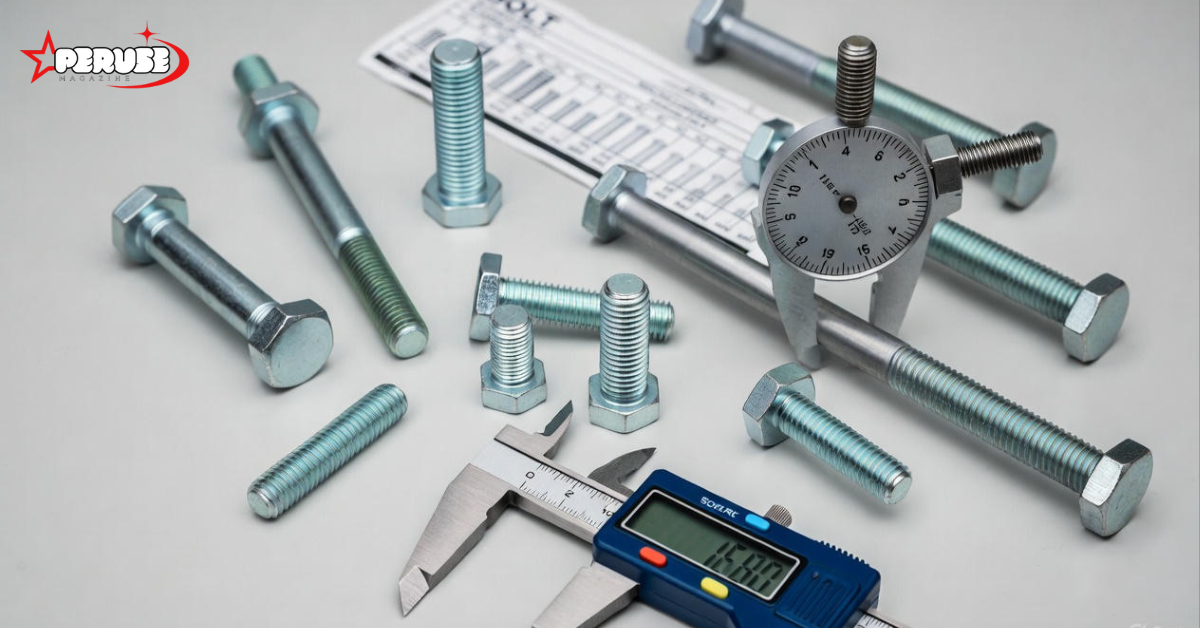
Choosing the wrong bolt can turn a simple project into a frustrating puzzle. Whether you’re repairing a piece of furniture, working on a car, or tackling a DIY build, using the correct fastener is non-negotiable. The secret to success lies in accurate measurement. This comprehensive guide will walk you through how to measure bolt sizes with confidence, covering every dimension from diameter to thread pitch. You’ll learn the essential tools, terminology, and techniques to identify any bolt correctly the first time.
Why Accurate Bolt Measurement Matters
Using an incorrectly sized bolt is more than just an inconvenience. It can compromise the integrity, safety, and finish of your entire project.
Consequences of Incorrect Measurements
A bolt that’s too small can shear under pressure, while one that’s too large can split the material you’re fastening. Incorrect thread pitch can strip threads in nuts or tapped holes, creating a weak connection that may fail. This leads to wasted time, damaged parts, and potential safety hazards.
When Precision is Critical
Precision is paramount in automotive repairs, structural applications, machinery assembly, and any project involving moving parts or significant load-bearing. Even in woodworking, an oversize bolt can crack wood, ruining your workpiece.
Real-World Applications
From replacing a missing bolt on a bicycle to selecting the right hardware for a deck, knowing how to measure bolt diameter and length is a fundamental skill for any home improver, hobbyist, or professional.
Understanding Bolt Anatomy and Terminology
Before you measure, you need to know what you’re looking at. Here are the key parts of a standard bolt.
Key Bolt Components
- Shank: The unthreaded portion of the bolt body below the head.
- Threaded Portion: The spiraling ridges that engage with a nut or tapped hole.
- Bolt Head: The top part used to drive the bolt (e.g., hex, socket, round).
Critical Measurement Points
- Major Diameter: The largest diameter of the bolt’s threads. This is the primary measurement (e.g., 1/4″, M6).
- Thread Pitch: The distance between adjacent threads. In metric, it’s measured in millimeters. In Imperial (SAE), it’s expressed as Threads Per Inch (TPI).
- Length: Measured from the bearing surface of the head to the very tip of the bolt.
Essential Tools for Measuring Bolts
Having the right tools makes the job accurate and simple.
Basic Measurement Tools
For rough estimates, a standard measuring bolt with a ruler or tape measure can work for length. However, it lacks precision for diameter and pitch.
Precision Measurement Instruments
- Vernier Caliper or Digital Caliper: The most versatile bolt measurement tool. It accurately measures diameter, length, and head size.
- Micrometer: Offers the highest precision for diameter measurements, often used in machining.
Thread-Specific Tools
- Thread Pitch Gauge: A set of blades with precise thread profiles. You match a blade to your bolt’s threads to find the pitch. Essential for thread pitch diameter identification.
- Bolt Gauge Ruler: A handy reference tool with graduated holes and thread profiles for quick identification.
How to Measure Bolt Diameter
Diameter is the most critical dimension. Here’s the correct way to find it.
Measuring Major Diameter with a Caliper
Use your digital caliper for bolts. Close the jaws around the threaded portion (not the shank) without squeezing the threads. This reading is the major diameter. Repeat at a few points, as bolts can wear.
Using a Bolt Diameter Measurement Tool
A bolt gauge ruler has a series of sized holes. Slide the bolt’s threads into the holes until you find the one it fits snugly into. The labeled size is your diameter.
Metric vs Imperial Bolt Diameter Standards
- Metric bolts (e.g., M6, M8) list the major diameter in millimeters (e.g., M6 = ~6mm).
- Imperial/SAE bolts use fractional inches (1/4″, 1/2″) or numbered sizes (#8, #10).
Determining Bolt Size from Hole
If you only have a hole, measure its inner diameter with calipers. The bolt’s major diameter should be slightly smaller. A bolt sizing calculator or chart can suggest a standard size for that hole.
How to Measure Bolt Length Correctly
Bolt length standards define where to measure, and it varies by head type.
Standard Measurement Method
For most hex and socket head bolts, measure shank length from directly under the head to the very end of the bolt. Do not include the head height.
Special Head Type Considerations
- Flat/Countersunk Heads: Measure the overall length from the very top of the head to the tip.
- Carriage Bolts and Lag Bolts: Measure from under the curved head (the bearing surface) to the tip.
Common Bolt Length Standards
Lengths are typically standardized in millimeter or inch increments. Refer to a bolt size chart for available options.
How to Measure Thread Pitch on a Bolt
Thread pitch ensures your bolt mates correctly with a nut.
Using a Thread Pitch Gauge
This is the easiest method. Fan out the blades of your thread pitch gauge and try different sizes against the bolt’s threads. The blade that meshes perfectly without gap identifies the pitch (e.g., 1.25mm for metric, 13 TPI for Imperial).
Alternative Methods Without a Gauge
- For Imperial Bolts: Use a ruler to measure 1 inch along the threads. Count the number of thread peaks within that inch. This is your Threads Per Inch (TPI).
- For Metric Bolts: Measure 10mm (or 20mm for better accuracy) and count the threads. Divide the distance by the number of threads to get the pitch in mm.
Thread Type Identification
- Coarse Threads (UNC/UCS): Standard for most applications; more resistant to cross-threading.
- Fine Threads (UNF/SAE): Used in precision applications, automotive, and where vibration resistance is key.
How to Measure Bolt Head Size
Head size determines the wrench or socket you’ll need.
Hex Head Bolt Dimensions
Measure across the flats of the hex head. This “wrench size” is standardized. For example, a 1/2″ diameter bolt typically has a 3/4″ hex head.
Socket Head Cap Screw Size
Measure the internal hex or Allen key drive size. This requires small calipers or a set of hex keys to find the matching size.
Carriage Bolt Sizing
Measure the diameter of the smooth, round head and the dimensions of the square neck beneath it that prevents spinning.
Bolt Size Charts and Reference Guides
A good chart is your best friend for bolt specification.
Metric Bolt Size Chart
A metric bolt size chart will list major diameter (M5, M6, etc.), standard thread pitch (e.g., M6-1.0), corresponding wrench size, and suggested drill bit sizes for tapping.
SAE/Imperial Bolt Size Chart
An SAE bolt measurement chart shows fractional diameters (#8, 1/4″, etc.), associated threads per inch (e.g., 1/4″-20), and wrench sizes. This is key for standard bolt sizes explained.
How to Read Bolt Markings
Many bolts have markings on the head indicating strength grade or material. For instance, Grade 8 bolt dimensions are high-strength, and the head will have 6 radial lines. Metric classes like 8.8 or 10.9 denote similar strength ratings.
Common Bolt Types and Specifications
Hex Bolts
The most common type. Hex bolt dimensions are defined by diameter, length, and thread pitch. Grade 8 bolt dimensions refer to a high-strength imperial standard.
Carriage Bolts
Identified by a smooth, rounded head and a square neck under the head for carriage bolt sizing. Used where a clean finish is desired.
Lag Bolts
Heavy-duty wood fasteners with a tapered point and coarse threads. Lag bolt measurements are crucial for determining the correct pilot hole size.
Machine Bolts
Designed to be used with a nut or into a tapped hole. They have precise, uniform threads. Can be fully or partially threaded.
Practical Tips for Accurate Measurement
- Clean the Bolt: Dirt and rust can affect measurements.
- Measure Multiple Times: Check diameter at several points along the threads.
- Use the Right Tool: A $20 digital caliper is a worthwhile investment over a ruler.
- Perform a Bolt Fitment Check: The best test is to thread your measured bolt into a known nut or thread hole of the suspected size.
Conclusion
Learning how to measure bolt sizes is a straightforward but essential skill. By understanding the key dimensions—major diameter, length, and thread pitch—and using basic tools like a caliper and thread gauge, you can confidently identify any fastener. Always double-check your measurements against a reliable bolt size chart for confirmation, especially for critical applications. When in doubt, take your measured bolt to a hardware store for a direct match.
Frequently Asked Questions
What is the easiest way to measure bolt size?
The easiest comprehensive method is to use a digital caliper for the diameter and length, and a thread pitch gauge for the threads. For quick field identification, a bolt gauge ruler is very effective.
Can I measure thread pitch without a gauge?
Yes. For Imperial bolts, count how many thread peaks fit in one inch (TPI). For metric bolts, measure a length like 20mm, count the threads within it, and divide the length by the count to get pitch in mm.
How do I know if my bolt is metric or standard (SAE)?
Try a nut from each system. A metric nut won’t thread smoothly onto an SAE bolt, and vice-versa. Also, metric bolt heads often have the strength class marked numerically (e.g., 8.8), while SAE bolts use radial lines.
What size drill bit do I need for a specific bolt?
This depends on whether you need a clearance hole (bolt passes through) or a tap hole (bolt threads into). Refer to a bolt specification chart for recommended drill bit sizes. For a clearance hole, the drill bit is slightly larger than the bolt’s major diameter.
How do you measure a bolt that is installed?
For length, measure from the exposed underside of the head to the tip. For diameter, try to measure the exposed threads with calipers or use an open-end wrench as a gauge—the wrench size that fits the head correlates to the bolt diameter via a chart.
What is the difference between thread pitch and threads per inch?
They are two ways of measuring the same thing. Thread pitch (metric) is the distance between threads in millimeters. Threads per inch (TPI) (Imperial) is the number of threads in one inch. They are inverses of each other.
How accurate do my bolt measurements need to be?
For most DIY projects, measurement to within 0.5mm or 1/64″ is sufficient. For mechanical, automotive, or structural applications, greater precision is required, and using calibrated tools like micrometers is advised.